
For years, we’ve talked about Industry 4.0—smart factories, automation, and the Internet of Things reshaping how we produce and consume. But now, a new phase is emerging: Industry 5.0. Unlike its predecessor, which focused heavily on automation and efficiency, Industry 5.0 brings the human back into the equation.
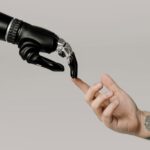
It’s not just about machines working smarter—it’s about people and machines working together.
What Is Industry 5.0?
Industry 5.0 represents a shift from automation-driven production to human-centered collaboration. Instead of replacing workers with robots, the idea is to use advanced technologies—like artificial intelligence (AI), robotics, and big data—to enhance human creativity, skills, and decision-making.
Think of it as the partnership between human ingenuity and machine precision.
Key Characteristics of Industry 5.0
- Human + Machine Collaboration
Robots and AI handle repetitive, data-heavy tasks, while humans focus on creativity, problem-solving, and innovation.
- Personalization at Scale
Customers increasingly expect personalized products. Industry 5.0 enables mass customization, where machines produce at scale but adapt to individual preferences.
- Sustainability
Efficiency isn’t just about cost—it’s about reducing waste, optimizing resources, and creating greener processes.
- Resilience
By combining human adaptability with machine consistency, companies can respond faster to disruptions—whether market shifts, supply chain issues, or global crises.
Why Does Industry 5.0 Matter?
For Businesses: It means staying competitive by offering smarter, more flexible solutions that customers actually want.
For Workers: It redefines roles, moving away from repetitive labor toward more meaningful, creative, and value-driven work.
For Society: It pushes industries toward sustainability and responsibility, aligning economic progress with environmental and social goals.
Real-World Examples
Manufacturing: Cobots (collaborative robots) work side by side with humans, assisting in assembly without taking over the role completely.
Healthcare: AI systems analyze patient data, but doctors make the final calls with more precision and insights at hand.
eCommerce: AI helps predict customer preferences, while human designers and marketers create experiences that connect emotionally.
Looking Ahead
Industry 5.0 is not about choosing humans or machines—it’s about blending the strengths of both. The companies that succeed will be the ones that know how to build partnerships between people and technology, focusing not only on efficiency but also on sustainability, creativity, and humanity.
In other words, Industry 5.0 isn’t just the future of work—it’s the future of how we live, produce, and grow.